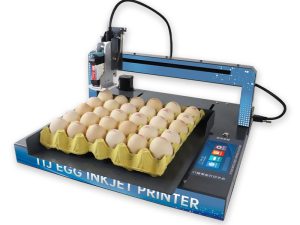
An XY gantry, not a fixed head bar
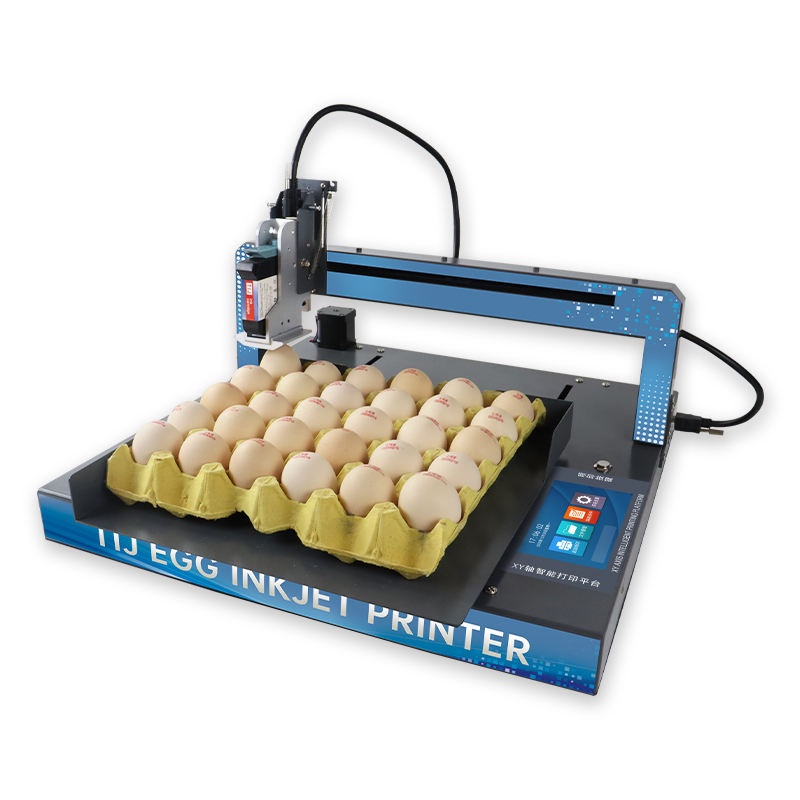
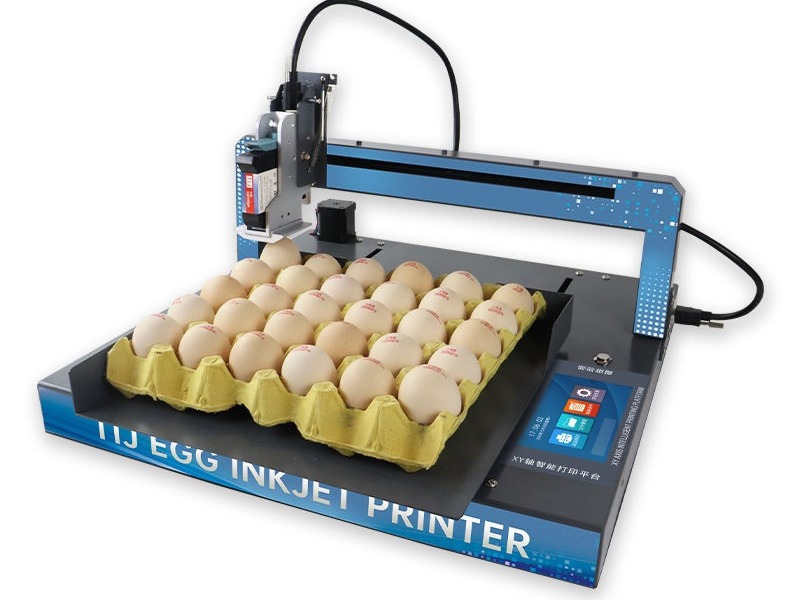
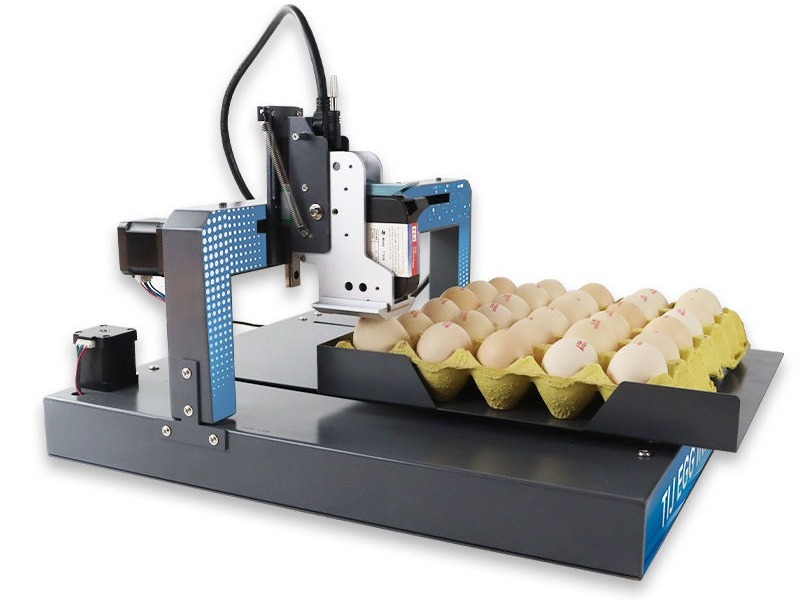
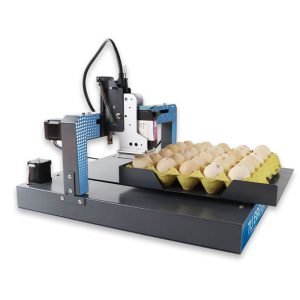
The head moves in two axes over a stationary tray, so a narrow machine covers the whole 5 × 6 area. Positioning runs on a stepper motor and the tray stays exactly where the operator set it down.
Tray-type XY gantry, one full tray in about 11 seconds
Model XY110
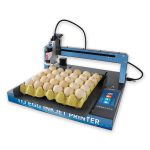
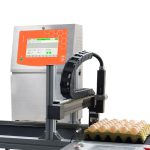
The XY110 is a tray-type XY gantry egg printer. The tray is loaded onto the platform and the head travels across it, so a full 5 × 6 tray is coded in about 11 seconds without any egg being handled individually.
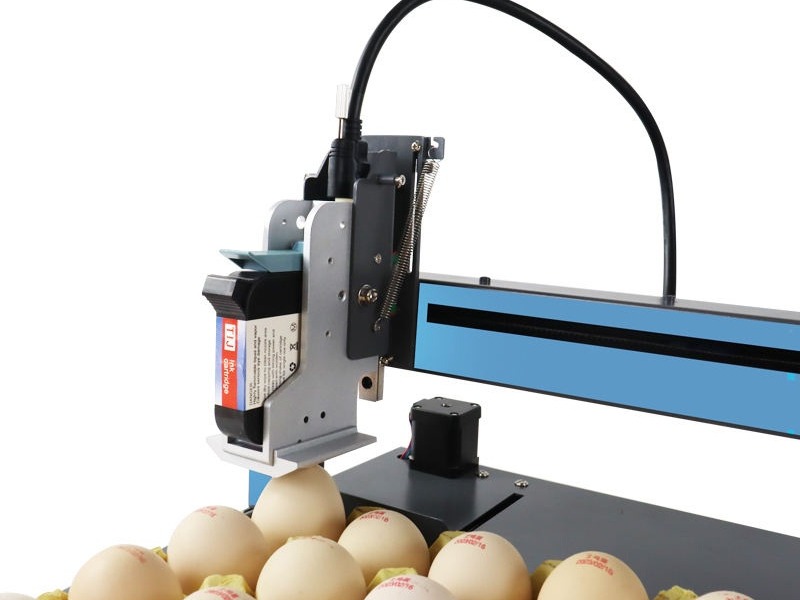
Print height adjusts from 2 to 12.7 mm and resolution from 300 to 600 dpi, which covers a fine date on the shell as readily as a larger lot code. Positioning runs on a high-quality stepper motor, and the nozzle height follows the egg size automatically, which keeps the unit simple to operate and low on failure rate.
A 5.0-inch touch screen running Linux handles on-machine editing, and the interface supports 25 languages for export markets. Jobs move over Bluetooth, USB or DB9, and the cartridges come in food-grade, water-based and oil-based formulations at 42 ml each, in red, yellow, blue, green, black and white. The metal frame measures 50 × 50 × 21 cm and packs to 56 × 56 × 28 cm at 12 kg.

Reply within 24 hours · Shanghai, China · Ships worldwide
No sorting, no breaking the tray apart, no second pass.
A standard 5 × 6 tray drops onto the platform and becomes the fixture. Nothing is unloaded, re-stacked or carried past a fixed head.
Choose the saved job on the 5.0-inch touch screen. Dates, lot numbers, logos and QR codes stay on the machine as presets, in any of 25 interface languages.
A stepper-driven XY gantry carries the head over the tray, and the full 30 eggs are coded in about 11 seconds.
The parts of the machine that decide throughput, code quality and how long a changeover takes.
The head moves in two axes over a stationary tray, so a narrow machine covers the whole 5 × 6 area. Positioning runs on a stepper motor and the tray stays exactly where the operator set it down.
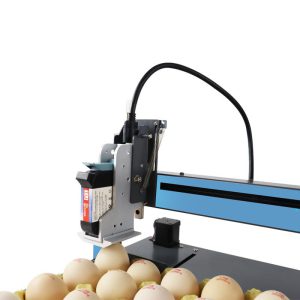
Nozzle height tracks the shell automatically inside the 2 to 12.7 mm range, so a tray of mixed sizes does not need a parameter change between duck, hen or larger eggs.
The frame measures 50 × 50 × 21 cm and packs to 56 × 56 × 28 cm at 12 kg, so the XY110 can move between a packing room and a farm shop. Jobs arrive over Bluetooth, USB or DB9, and the whole unit runs Linux on a 5.0-inch touch screen.
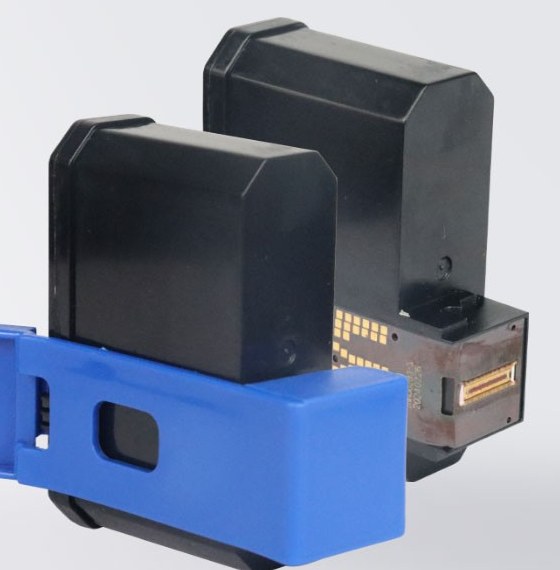
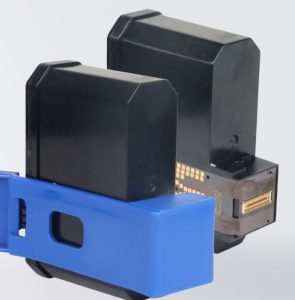
Water-based or oil-based food-grade ink in 42 ml cartridges, printed without contact so the shell keeps its bloom and no pad needs cleaning.
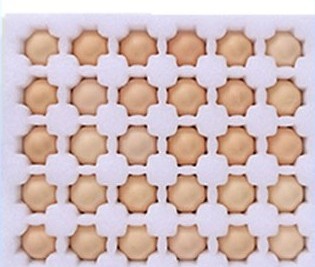
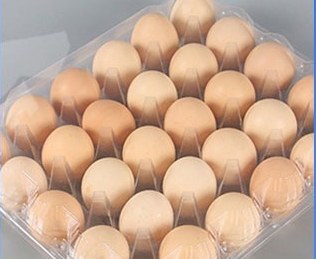
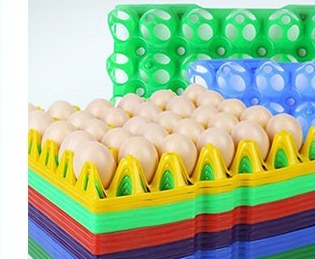
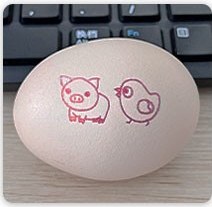
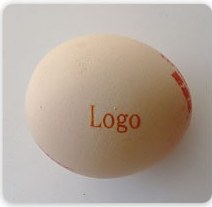
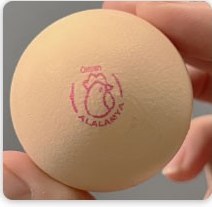
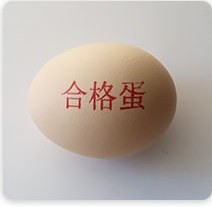
If your line uses one of these, the tray needs no adapter.
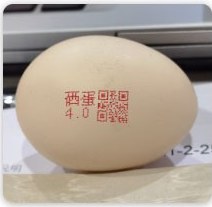
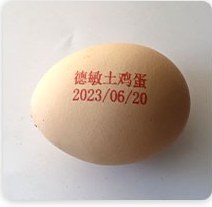
Photographed on real eggs, not rendered artwork.
| Model | XY110 |
|---|---|
| Print range | 5 × 6 trays (30 eggs) |
| Print height | 2–12.7 mm, adjustable |
| Print resolution | 300–600 dpi, adjustable |
| Screen | 5.0-inch touch screen |
| Operating system | Linux |
| Body material | Metal body |
| Machine size | 50 × 50 × 21 cm |
| Packaging size and weight | 56 × 56 × 28 cm, 12 kg |
| Power | 100–240 V AC in, 16.8 V DC |
| Throughput | 30 eggs in about 11 seconds |
| Ink type | Food-grade / water-based / oil-based, 42 ml cartridge |
| Ink colours | Red, yellow, blue, green, black, white |
| Print content | Letters, numbers, Chinese, logos, QR codes, dates, lot numbers, etc |
| External interfaces | USB, DB9 |
| Wireless | Bluetooth transmission |
| Languages | 25 languages including Chinese, English, Arabic, Russian, French, etc |
| Printing material | Eggs, pulp / foam / plastic trays and cartons |
| Warranty | 12 months |
Same factory, four different jobs. Pick the row that matches your line.
| Machine | Best for | Coverage | Speed | Resolution | Height | Interface |
|---|---|---|---|---|---|---|
Six Head Egg Inkjet Printer
S10-6
|
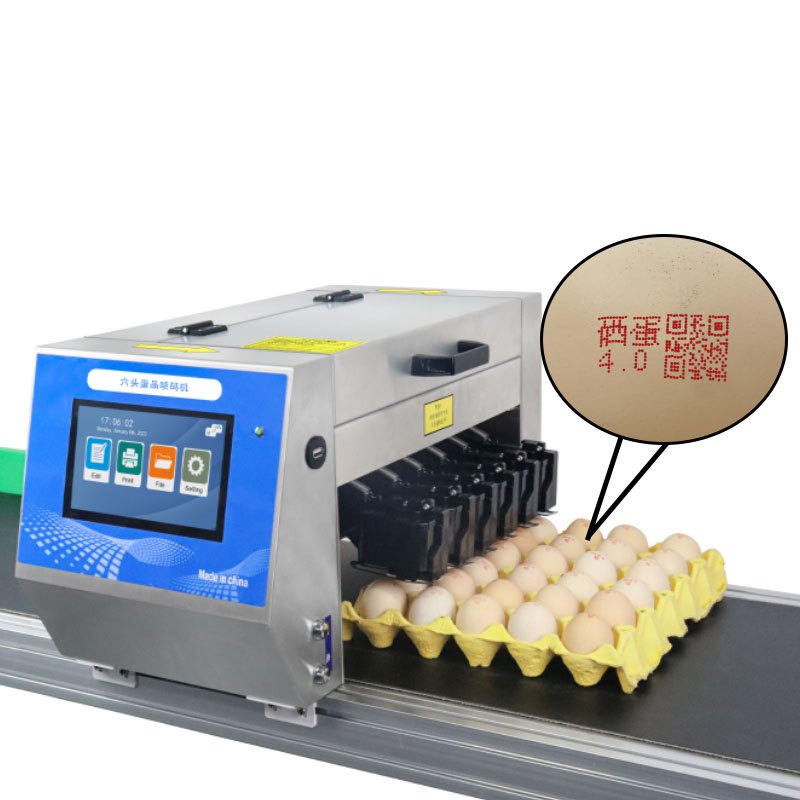
High-volume grading lines on standard trays | 5 × 6 trays (30 eggs) | ≈ 36,000 eggs/hour 20 trays/min | 600 dpi HD | Maximum 12.7 mm | USB / HDMI |
Six Nozzle Egg Coding Machine
S600D
|
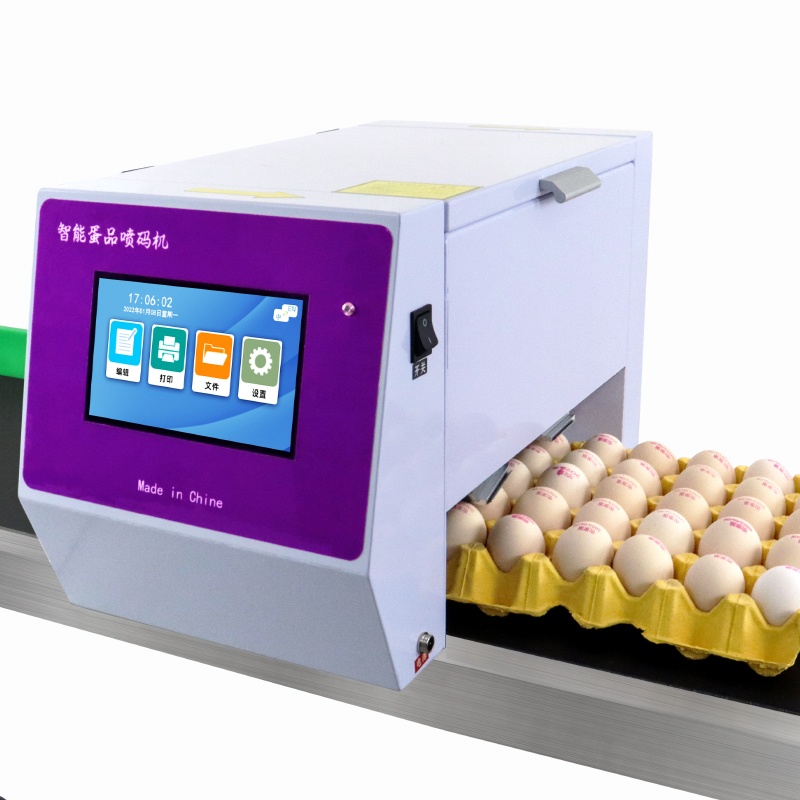
Mixed tray layouts that must not be sorted | 5 × 6 trays (30 eggs) | ≈ 36,000 eggs/hour 20 trays/min | 300–600 dpi, adjustable | 2–12.7 mm × 6 nozzles | USB, RS232 |
XY110 Egg Inkjet Printer
XY110
|
Smaller farms, duck eggs and mixed sizes | 5 × 6 trays (30 eggs) | ≈ 9,800 eggs/hour 30 eggs in ~11 s | 300–600 dpi, adjustable | 2–12.7 mm, adjustable | USB, DB9 |
Small Character Egg Printer
S200PLUS
|
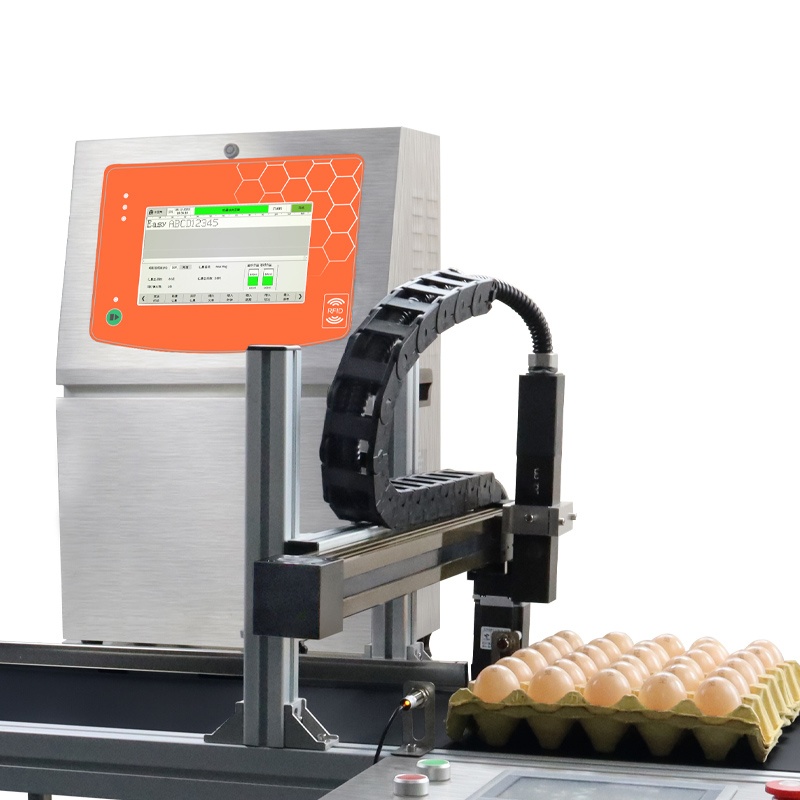
20 mm characters, database codes | 5 × 6 trays (30 eggs) | ≈ 7,200 eggs/hour 15 s per tray | — | 2–20 mm | USB, RS232, Ethernet |
Hourly figures are calculated from the speed the factory publishes, on a standard 5 × 6 tray (30 eggs). Real throughput follows your line speed, loading and stoppages. A dash means the factory has not published that figure — ask us and we will confirm it against your line.
A duck egg coding machine is an egg printer configured to handle the larger, often irregular shape of duck eggs. It prints dates, batch codes, logos and QR codes using food-grade ink. Because duck eggs vary more in size, machines with adjustable head height or auto-lift…
Read the full answerAn XY-axis egg coding machine moves a single print head along both the X (left-right) and Y (front-back) axes to cover a whole tray of eggs. Instead of six fixed heads, one head travels to each position and prints. This design is compact and economical: you…
Read the full answerYes. Most modern automatic egg printers handle a range of sizes through adjustable guides and auto-lift (suspended) print heads. The head rises as each egg passes and keeps a constant 2–5 mm print distance above the eggshell. This means one machine can code small quail eggs,…
Read the full answerYes. The same food-grade, certified ink used on chicken eggs is safe on duck, quail and other edible eggs. It stays on the shell surface and does not reach the inside. Because duck and quail shells can differ in porosity, reputable suppliers validate their inks for…
Read the full answerFor a small farm, start simple and low-cost. A handheld inkjet printer (single nozzle, battery powered) prints dates, codes and logos on cartons and eggs for a few dozen at a time. If you pack regularly, a single-head or compact XY-axis automatic coder on a small…
Read the full answerPoultry farms need a coder that keeps up with daily collection and supports branding. A multi-head (6-head) automatic egg printer is the typical choice, coding whole trays at once and integrating with washers and graders. Farms selling "farm-fresh" or branded eggs benefit from printing their logo…
Read the full answerSend the tray type, eggs per hour and current marking step. We reply with the head count and a price within 24 hours.
Setup walks, line-speed maths and compliance notes from our Solutions desk that name the XY110 Egg Inkjet Printer.
Egg Coding Cost: Where the Money Actually Goes
Where egg coding cost sits: four lines that carry almost all of it, the overspends that look impressive, and why cost per egg beats cost per…
Read the guide
Egg Coding for Small Poultry Farms: Start Here
Egg coding for small poultry farms, start to finish: what to print, the smallest setup that works, and five week-one errors that are habits.
Read the guide
How to Choose an Egg Coding Machine Without Overpaying
Overpaying for an egg coding machine? Four add-ons you may not need, the packing styles that decide head count, and what really moves the quote.
Read the guide
Egg Printers vs Hand Stamps: Which Fits Your Line?
Egg printers or a hand stamp? Compare labour per tray, consistency and cost per thousand eggs, and where a machine starts paying for itself.
Read the guide
Egg Stamping Machine or Inkjet: Cost Per Egg
An egg stamping machine and an inkjet unit compared on cost per egg: capital, labour, consumables and rejects, and the volume where numbers cross over.
Read the guide
Tell us about your line — we reply within 24h.