A Julian date on eggs is the day of the year written as three digits, so 001 is January 1 and 365 is December 31. Most people first meet it on a carton, printed in a corner of the label nobody reads; reading one takes a single lookup. Printing one that nobody can read takes a recall, and that is the part worth getting right.
A Julian date on eggs counts days from the start of the year instead of naming a month. There is no month field, no slash, and no room for a reader to guess which number comes first. One string carries the whole position in the calendar.
Three digits is the smallest width that covers a year, which is why the count starts at 001 rather than 1. The padding is not decoration; it keeps every code one length, so a scanner and a tired operator read it the same way.
On a carton carrying the USDA grade shield, the number is not optional. It is the pack date, the day the eggs were washed, graded and cartoned, and the grading standards require it. The current rule text sits with USDA AMS.
Two moves cover almost every code. Find the first day of the month, then add the day number and subtract one.
March 15 is 060 plus 15 minus 1, which lands on 074. October 1 is simply 274, because that is where the month begins. The table below gives all twelve starting points for a common year.
| Month | First day of year |
|---|---|
| January | 001 |
| February | 032 |
| March | 060 |
| April | 091 |
| May | 121 |
| June | 152 |
| July | 182 |
| August | 213 |
| September | 244 |
| October | 274 |
| November | 305 |
| December | 335 |
074 · 15 March
Leap years shift everything from March onward by one day, so the year 2024 opened March at 061 instead of 060. A pack that reads one day out during a leap year is usually not an error at all.
A code written 03/15/2026 means two different days depending on which side of the Atlantic reads it. A three-digit count cannot be misread that way.
The second reason is less obvious. Day numbers sort correctly as numbers, which matters when a conveyor, a scanner or a spreadsheet has to put trays in sequence. Month and day fields do not sort that way without extra rules.
The pack date also anchors another rule worth knowing. When a sell-by date appears on a grade-shield carton, it may not exceed 45 days from the date of pack, as the agency sets out in its carton dating guidance.
Not every market works this way. UK and EU cartons carry a best-before date in day-month order plus a producer code, with no day-of-year number anywhere. A line that ships to both markets ends up printing two formats, and that is where most of the format errors begin.
This is the weakness that surfaces a year later. Day 001 in January and day 001 in the previous December produce identical characters, and nothing printed beside them tells the two apart.
There are two honest fixes. Print the year beside the day; or keep the year in the packing log and let the egg carry three digits. Most lines take the second and then forget to keep the log.
Whichever you choose, write it down. A format that lives in one operator’s memory leaves with that operator.
The version that survives both problems is a date plus a short suffix. Egg date codes as a traceability tool works through the suffix and what it resolves.
Three dates can appear on one package, and they answer different questions. The table below separates them by who requires each one and what it actually fixes.
| Marking | Required by | What it fixes | Width |
|---|---|---|---|
| Julian pack date | Federal grading rule, on grade-shield cartons | The day the eggs were washed, graded and packed | 3 digits |
| Sell-by or EXP | State egg law, or a retail contract | The last day the carton should be offered for sale | Varies by state |
| Batch or line code | Your own traceability system | Which run, shift and line the egg came off | Whatever you assign |
Only one of the three is a federal requirement, and it is the one shoppers never notice. The other two exist because a state or a buyer asked for them.
That is the practical answer to whether a Julian date on eggs is compulsory. It is compulsory where the carton carries a grade shield, and voluntary everywhere else. Background on how the digits get printed sits in this answer on egg Julian date printing.
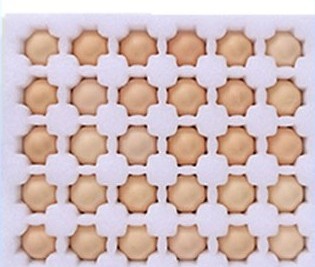
Decide the string before the first tray runs, not after the first complaint. Three settings do most of the work.
Leading zeros belong in the preset, not in someone’s memory. Without them, July 4 prints as 185 on one shift and 0185 on the next, and a scanner treats those as two formats.
Character height buys legibility on a curved surface. The small character egg printer reaches 20 mm, which leaves room for a farm name and a date in one mark; a tight tray pitch will not offer that much.
Store the whole string as a job. This machine runs formats from a 10.1-inch screen, so a preset is one tap.
Send us the string you print today and we will tell you what it resolves to, and where it stops.
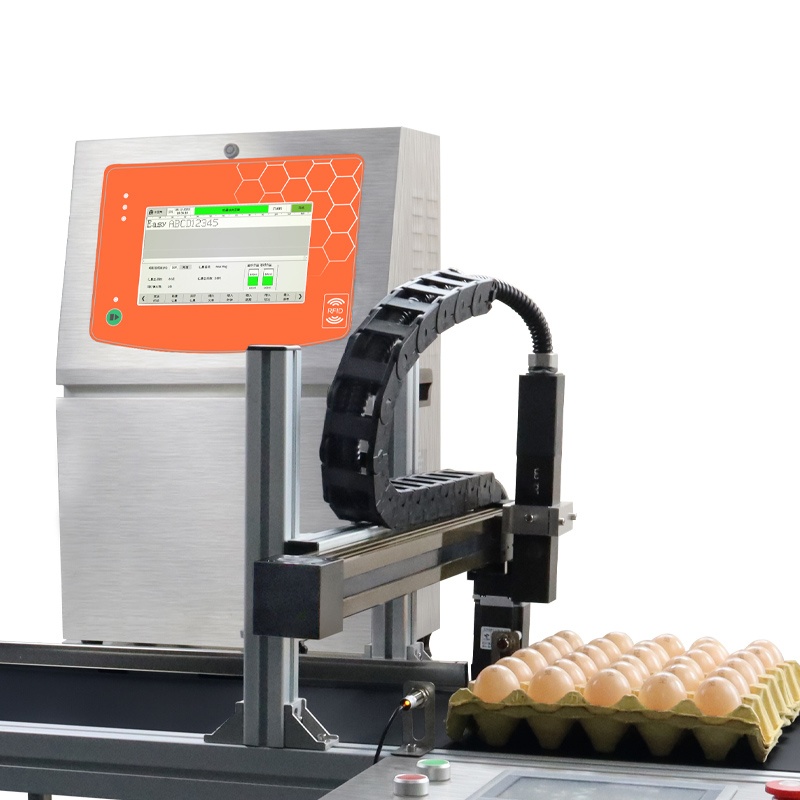
S200PLUS
20 mm characters and database-driven codes on eggs
SHICAI builds food-grade egg coding machines for poultry farms and packers in the US, UK, EU, Australia and worldwide. Tell us your daily volume and egg types, and our engineers will recommend the right model and send a free sample print.
Tell us about your line — we reply within 24h.