A code that starts bold and ends the shift pale is a diagnostic gift. Something changed during the run, and the change is almost always one of four things: ink, gap, dwell or temperature. Fix the right one and the egg printing machine stops being the suspect.
Eggshell is not paper. The ink sits on a cuticle layer that varies in thickness across a single egg, and on a warm shell the ink dries from the top down. A code can look perfect for the first fifty trays and thin out once the room warms up or the cartridge nears the end of its working life.
Fading is therefore rarely random. It follows a pattern, and the pattern tells you which variable moved.
Work through them in that order. Ink first, because it is the cheapest to rule out. Gap second, because a gauge takes ten seconds. Speed third, because it needs a stopwatch and a full shift. Temperature last, because it is usually the answer once the other three check out.
Write the baseline down on the day the machine is commissioned, with the ink batch number beside it. Then a fade has a reference point: either the settings drifted or the ink changed, and the two are easy to separate once the baseline exists.
For carton and box work, an Small Character Egg Printer gives more room to work with: a 2 to 20 mm print height across a 3 to 30 mm working distance, dynamic barcodes and QR codes, and codes pulled from an external database or a serial feed. Larger characters hide small variation that a tiny date code would expose.
On the shell itself, keep the character narrow and the height modest. A wide, tall character on a curved surface loses its edges at the extremes of the curve, and the eye reads that loss as fading.
Cleaning belongs in the same routine. A head wiped with the wrong solvent can lose a nozzle for a week, and a head left unwiped in a dusty hall loses one for a day. Follow the ink supplier’s cleaning instruction rather than a workshop habit.
Rejected trays are the cost, not the cartridge. A code that reads at 90 percent is a code that gets checked by hand at the packing station, and the checking is what consumes the shift.
Ask the supplier how many eggs one cartridge covers at your character size. That single number, not the cartridge price, decides the running cost. A cheaper cartridge that covers half as many eggs is the more expensive choice.
Two suppliers quoting the same machine can differ widely on consumables, and that gap compounds every month. Ask what a full year of cartridges costs at your volume, then compare that one figure against the other quote.
Where the mark carries regulated information, the format is fixed by market rules rather than by preference. The EU marketing standards for eggs set out what a shell mark has to contain, and designers should work backward from those fields.
Send a photo of a good code and a faded one from the same shift. The comparison usually identifies the cause before anyone visits the site, because ink starvation and gap drift look different at the edges.
The question archive covers cartridge storage and cleaning intervals. For a machine sized to your line, ask an engineer, or compare options in the solutions library.
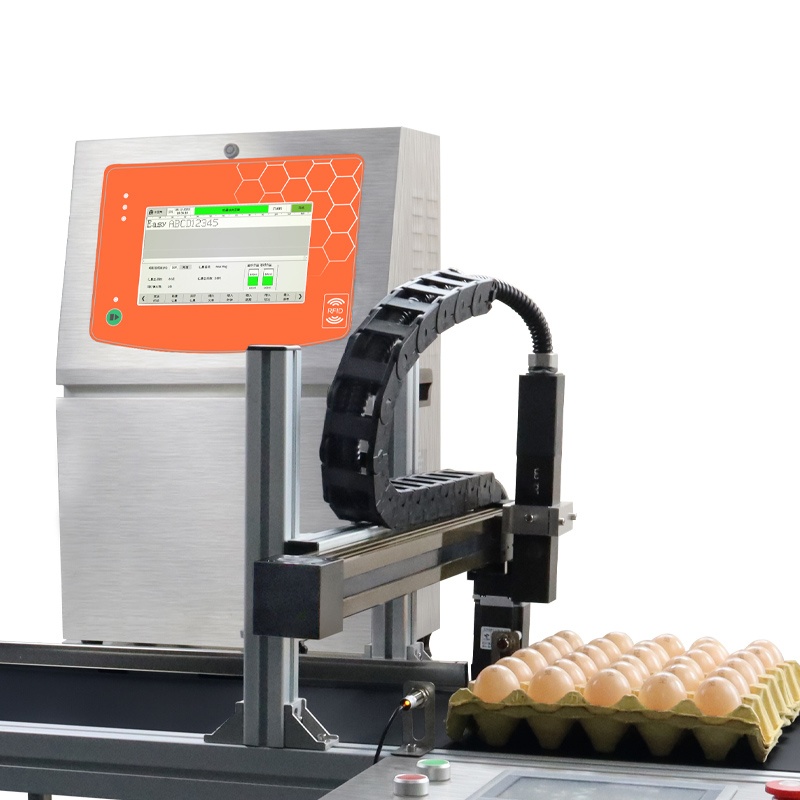
S200PLUS
20 mm characters and database-driven codes on eggs
SHICAI builds food-grade egg coding machines for poultry farms and packers in the US, UK, EU, Australia and worldwide. Tell us your daily volume and egg types, and our engineers will recommend the right model and send a free sample print.
Tell us about your line — we reply within 24h.